In a small home, furniture that does only one thing is a quiet luxury you can't always afford. When every square foot has to earn its place, the pieces that pull double duty — a bed that swallows your off-season clothes, a table that folds away after dinner — are what turn a cramped footprint into a home that feels generous. The trick is knowing which clever pieces actually deliver and which just look smart in a showroom.
Make every big piece do two jobs#
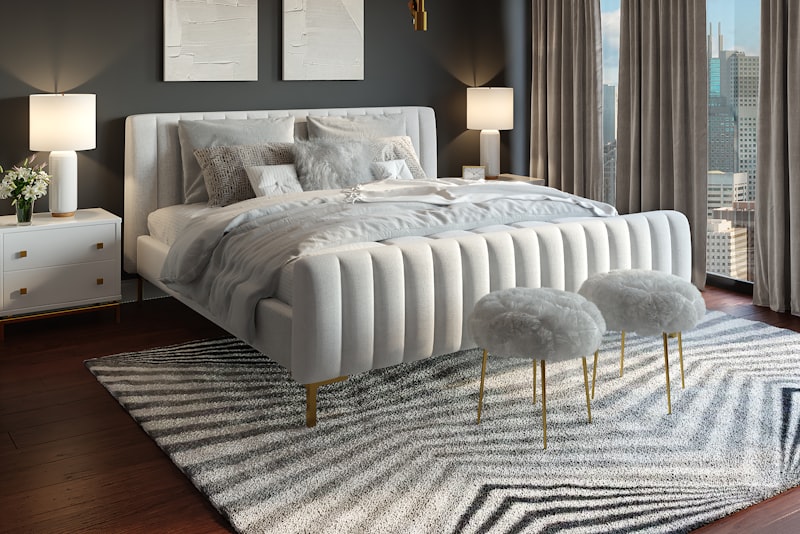
The largest items in your home — the bed, the sofa, the main table — claim the most floor, so they're where multifunction pays off most. Before you buy any of them, ask what second job each one could take on. A bed frame with drawers underneath or a lift-up base turns the dead space beneath your mattress into a full dresser's worth of storage. A storage ottoman becomes a coffee table, a footrest, extra seating, and a place to hide blankets all at once. A sofa with a pull-out bed lets a one-room home host an overnight guest without a spare room.
The principle is simple: you already need somewhere to sleep, somewhere to sit, and somewhere to put things down. If those necessary pieces can also store, host, or transform, you get the function without spending extra floor space on it. That's the whole game in a small home — not adding more furniture, but asking more of the furniture you were always going to buy.
Be realistic about how often you'll use the second function, though. A sofa bed that's a daily bed needs to be genuinely comfortable to sleep on, while one used twice a year can prioritize how it sits. Match the piece to your real life, not the most extreme scenario, and it'll serve you every day instead of just on the rare occasion.
Build storage into things you'd buy anyway#
The fastest way to make a small home feel calmer is to give everything a place to disappear, and the smartest storage hides inside furniture you already need. Rather than adding bulky standalone cabinets that eat the floor, look for pieces with storage built in, so the same footprint holds both function and stash.
A few combinations earn their keep in almost any small home:
- A storage bed or divan that turns the space under the mattress into drawers.
- A bench or ottoman at the foot of the bed or by the door that opens for blankets and shoes.
- A coffee table or side table with a shelf, drawer, or lift-top compartment.
- A bed frame, headboard, or sofa with built-in shelving along the back or sides.
The best storage in a small home is the kind you never see — built into the things you were going to own regardless.
The goal is to keep clutter behind closed surfaces so the room reads as serene rather than busy. Closed storage hides the visual noise of daily life, while a little open shelving can display the few things you genuinely love. When putting something away takes a second because its home is right there inside the furniture, you'll actually do it, and the whole home stays effortlessly tidier.
Choose pieces that change shape#
Some of the most valuable furniture in a small home isn't fixed at all — it folds, nests, rolls, or expands, so it takes up space only when you're using it. This flexibility is what lets one room shift from a workspace to a dining room to a place to relax without ever feeling like all those jobs are demanding attention at once.
A drop-leaf or extendable table stays small for everyday meals and opens up when friends come over. Nesting tables tuck into a single footprint and fan out when you need more surfaces. A fold-down wall desk gives you a real workspace by day and disappears flat against the wall by night. Stools that stack, chairs that fold, and carts on casters all do this same trick: they're there when you need them and gone when you don't.
If a flexible piece involves anything fixed to the wall — a fold-down desk or a Murphy-style bed that mounts into studs — make sure it's installed properly and safely, and bring in a professional for the structural anchoring. The point of furniture that changes shape isn't novelty; it's that a single room can wear several hats across a day and reset to calm in a few seconds. That low threshold for switching modes is exactly what makes a small home livable.
Never sacrifice comfort to save space#
Here's the rule that separates furniture that works from furniture you'll quietly resent: a clever piece that isn't comfortable or genuinely useful is just clutter with a good story. The whole point of multifunctional furniture is to improve daily life, not to win a space-saving contest. A pull-out bed you dread sleeping on, a chair that folds but hurts your back, a table that transforms but wobbles — none of these are bargains, no matter how much floor they save.
So judge every piece by how it feels and works in real use, not by how impressive the mechanism looks. Test the sofa you'd actually sit on every evening. Make sure the storage you'll open daily isn't a struggle to reach. Confirm the table is steady and the chairs are pleasant to sit in for a long dinner. Quality of materials and construction matters more in a small home, not less, because you live so close to every piece and you own fewer of them — each one carries more weight in the room.
A small home full of furniture that earns its footprint doesn't feel like a series of compromises. It feels intentional, generous, and surprisingly roomy, because nothing is wasting space and everything is pulling its weight. Buy the bed that stores, the table that folds, the ottoman that hides a season's worth of blankets — but only when they're truly comfortable and built to last. Measure twice, buy once, and let each piece do more so you can own less. That's how a compact home stops feeling small and starts feeling exactly right.