A room's dimensions are fixed, but how big it feels is wonderfully flexible. The human eye is easy to fool, and a handful of stylist tricks can make a snug space read as open, calm, and even generous. Best of all, none of it asks for a renovation — just a fresh look at the light, color, and layout you already have.
Chase the light#
Light is the single biggest lever you have over how large a room feels. A bright room always feels bigger than a dim one of identical size, so before you move a single thing, clear the way for every bit of light you can get.
Start at the windows. Heavy curtains that crowd the glass box a room in, so swap them for something lighter and hang the rod higher and wider than the frame. That simple move lets the panels frame the window without covering it, and it draws the eye up so the ceiling feels taller. Keep sills clear and make sure no tall furniture stands in front of the glass.
Then borrow light with mirrors. A mirror placed across from or beside a window does double duty — it bounces daylight deeper into the room and visually doubles whatever it reflects. One large mirror almost always beats a scatter of small ones. Pale, glossy surfaces help too: a sheen on the walls, a glass tabletop, a polished tray all catch light and pass it around instead of swallowing it.
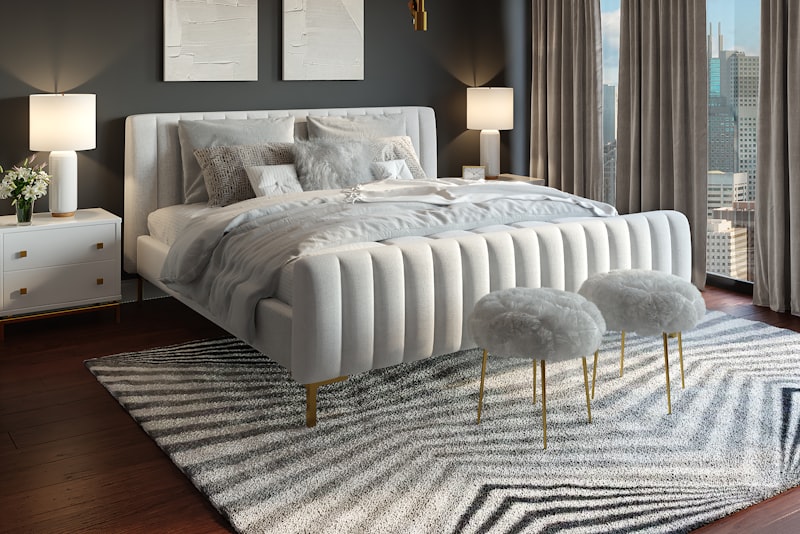
When the sun goes down, layer the artificial light. A lone overhead fixture flattens a room and leaves dark, shrinking corners, while a couple of lamps at different heights light those corners and let the space expand again after dark. Aim some of that light at the walls rather than straight down; washing a wall in soft light makes it feel like it's receding, and a glow in the far corner pulls the eye to the edges of the room so it reads as larger than it is.
Keep the floor in view#
The amount of floor you can actually see is one of the strongest cues your brain uses to judge a room's size. So the whole game is keeping that floor visible and letting your eye travel without slamming into a wall of furniture.
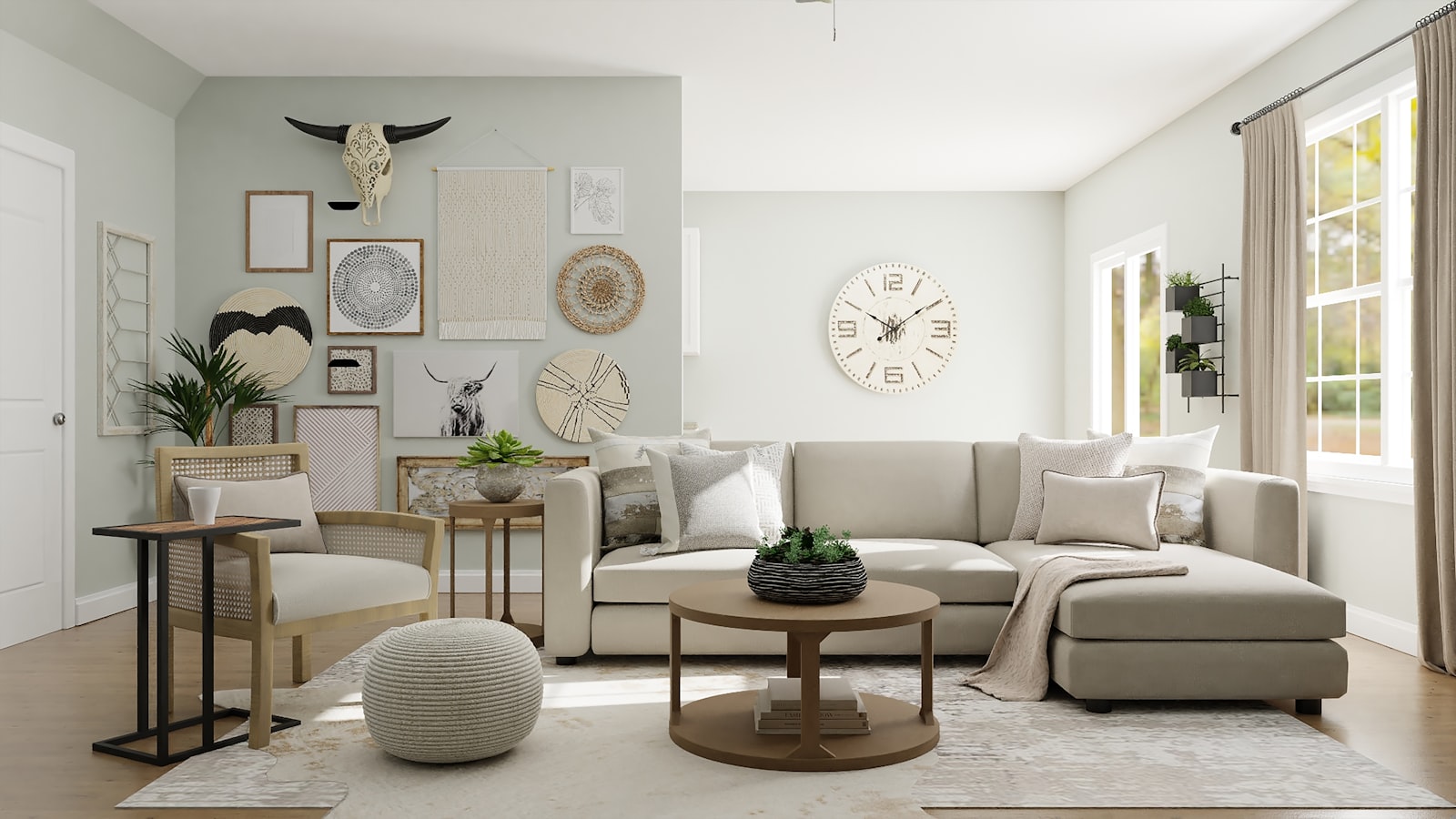
Choose pieces with legs. A sofa, chair, or console raised on slim legs lets light and floor flow underneath, which reads as far airier than a solid block sitting flush to the ground. Glass and open frames practically disappear, earning their keep in tight corners. Keep low pieces low, too — a room full of tall, bulky furniture closes in fast, while lower-profile seating leaves welcome air above it.
Empty floor is the cheapest square footage you own — the less your eye has to climb over, the farther the room seems to stretch.
Pull furniture slightly off the walls where you can, and resist lining every wall with something. A little breathing space around each piece makes the arrangement feel intentional rather than crammed. And mind your pathways: a clear sightline from the doorway straight across the room — ideally toward a window or a focal point — makes the space feel deeper the instant you walk in.
Scale matters here too. A few well-proportioned pieces always beat a crowd of small ones, because every extra object is one more thing for the eye to trip over. One generous sofa reads calmer than a sofa plus two chairs plus a bench all jostling for space. When you give each piece a little room to be itself, the whole arrangement settles, and a settled room always feels roomier than a busy one.
Let color blur the edges#
Color quietly shapes how big a room feels. Light, soft, cool tones recede and push walls away, while dark, warm, saturated tones advance and close in. That's why a pale room usually feels roomier than an intense one of the same dimensions.
But the real magic isn't white walls — it's continuity. When walls, trim, and ceiling wear closely related tones, the edges of the room blur and your eye doesn't stop at every corner. Painting the trim the same color as the walls, or close to it, erases the lines that chop a small room into pieces. Carry that palette into a large rug and the floor, and the whole space reads as one calm, continuous shape.
You can still go deep and feel spacious. A moody room can read as enveloping rather than cramped, especially when it's well lit. The principle is consistency: pick one direction and commit, instead of breaking the room into competing zones of color that announce exactly how small each one is. Add your interest through texture and a few accents rather than constant high contrast.
Style for calm, not clutter#
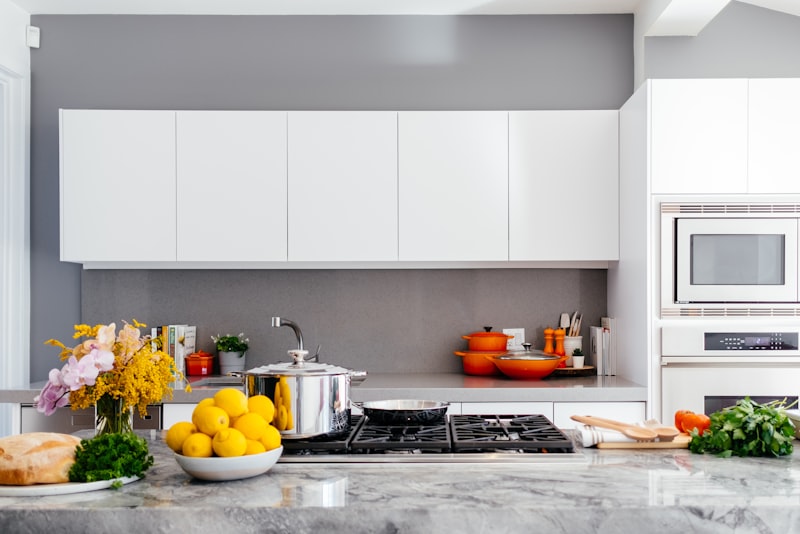
A small room and a cluttered room feel like the same problem, but they're not. You can make a genuinely tiny space feel serene and a large one feel claustrophobic purely through how much is on display. Editing is the most underrated trick in the book, and it costs nothing.
Go for fewer, larger pieces over many small ones. A single big piece of art makes a wall feel expansive, where a busy grid of tiny frames feels fussy and tight. One generous plant beats five little pots crowding a shelf. A few of these habits keep a room feeling open:
- Give daily clutter a landing spot so flat surfaces stay mostly clear
- Choose a few considered objects with space around them over packed shelves
- Let some walls and corners stay quiet so the eye has room to rest
That last point matters most. Empty space isn't wasted space — it's what gives a room its sense of openness and lets the things you love actually be seen.
You don't need more square footage to live somewhere that feels open and easy. Pour in the light, keep the floor and sightlines clear, carry a calm color all the way through, and edit until only what you love remains. Do those four things and a small room stops feeling like a limitation. It starts feeling like exactly the right size — snug, personal, and somehow bigger than the tape measure says.