A studio asks one room to be a bedroom, a living room, an office, and sometimes a dining room all at once. That sounds like a compromise, but it's really an invitation to design with unusual care. With a few thoughtful moves, a single open space can hold distinct zones that each feel intentional — no walls, no renovation, just a stylist's eye and the furniture you already own.
Start with how your day actually flows#
Before you drag the bed anywhere, spend a day noticing your own rhythm. When do you want quiet, and when does the space need to feel social? Where does the best light land in the morning versus the evening? A studio works when its layout follows your real routine rather than a magazine floor plan, so let your habits lead.
List the jobs the room has to do — sleep, work, lounge, eat, store — and rank them by how much they matter to your daily life. The activity you care about most deserves the prime real estate: the spot with good light, a comfortable distance from the door, and a little room to breathe. Lower-priority functions can tuck into the corners that are left. This simple act of prioritizing is what keeps a studio from feeling like everything is shouting for attention at once.
Then think about which zones clash. A bed that sits right beside your desk will quietly blur the line between rest and work, and a lounge area facing the kitchen sink rarely feels relaxing. When two zones don't get along, put distance or a piece of furniture between them. Timing helps here too: zones you never use at the same hour can share the same patch of floor and simply take turns, while zones that run at once need genuine separation.
Draw walls you can't see#
The whole craft of zoning a studio is suggesting boundaries without building them. A handful of reliable tools do most of the work, and they're things you can move, rearrange, and rethink as your life changes.
- A rug grounds a seating group and tells the eye, this is the living zone.
- The back of a sofa or a low bookshelf can face away from the bed to wall it off gently.
- An open shelving unit placed perpendicular to a wall creates a real divider while still letting light pass through.
- A change in lighting — a warm floor lamp in the lounge, a focused task light at the desk — signals a shift in purpose without a single partition.
The principle behind all of these is the same: give each activity an anchor and a soft edge. When you sit down in a zone, everything that zone needs should be within arm's reach, and the boundary should feel natural rather than forced. You're not hiding that it's one room — you're helping the eye understand it as several.
Sightlines matter more than you'd think. Whatever greets you from the doorway shapes your first impression of the entire studio, so arrange things so the most attractive or most-used zone meets you first, and the more utilitarian corner — the desk piled with work, the laundry basket — sits slightly out of the direct line of view.
Protect the bed above all#
In a studio, the bed is the zone that most needs to feel separate, because rest is hard when your sleeping spot is also the first thing you see when you walk in. Carving out even a loose sense of a bedroom does more for how a studio feels than almost anything else.
A studio feels calm not when it hides the bed, but when the bed feels like it belongs to its own quiet corner of the room.
You have gentle ways to set the bed apart. Tuck it into the corner farthest from the door so it reads as a retreat rather than a centerpiece. A tall headboard, a curtain hung from a ceiling track, a folding screen, or a bookshelf at the foot of the bed can all create a threshold without closing the space in. If you're tempted to add a ceiling-mounted track or any hardwired fixture to define the sleeping area, that's a job for a licensed professional rather than a weekend project.
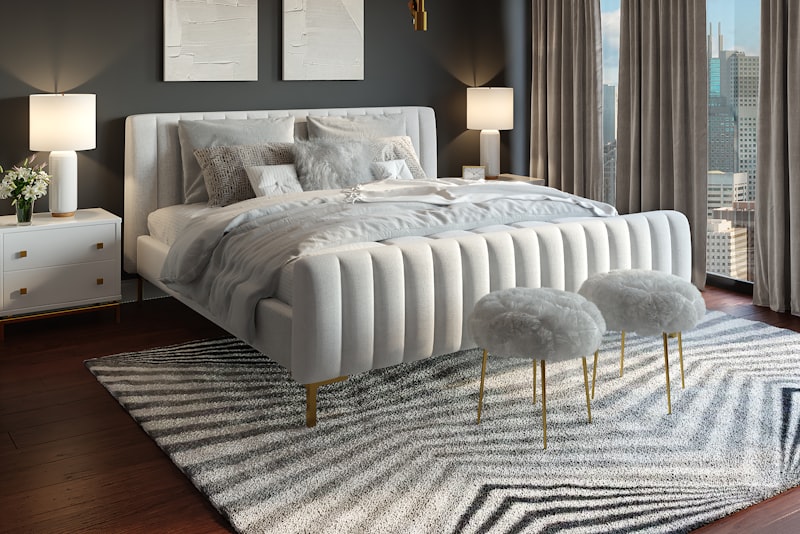
Even soft cues help. A different rug under the bed, a pendant or wall light reserved just for that zone, and bedding in slightly calmer tones all whisper that this corner is for winding down. The goal is a place your mind recognizes as off-duty, so sleep doesn't have to compete with the rest of your day for the same few square feet.
Let one palette hold it together#
Here's the balance a good studio strikes: each zone should feel distinct, but the room as a whole should read as one coherent space. The way to get both at once is a shared palette running quietly through everything you own.
Choose a small family of colors and materials — a warm neutral, a grounding deeper tone, and one accent you genuinely love — and let them appear in every zone in different proportions. The accent might show up as a desk lamp in the work corner and a cushion on the bed; the wood of the dining table might echo a shelf by the sofa. These repeated notes are the thread that stitches the zones into a single intentional home rather than four mismatched ones sharing a floor.
Texture carries this even further. Linen, wool, wood, and a touch of ceramic or metal can repeat across zones and make the whole studio feel layered and considered. Variety in texture keeps things interesting, while consistency in palette keeps things calm. There's no single correct formula here — trust your own eye, and you'll find the combinations that feel right in your space.
A studio is one of the most honest spaces a home can offer, because nothing hides and everything has to earn its place. Give it structure — clear priorities, soft boundaries, a protected bed, and a unifying palette — and it stops feeling like a single crowded room. Instead it becomes a series of small, well-considered places that flow into one another, ready to be an office by day, a living room by evening, and a restful retreat by night. That kind of flexibility, designed with care, is its own quiet luxury.