A studio asks one room to be everything — bedroom, living room, kitchen, office, and dining room all at once. That sounds like a constraint, but it's really an invitation to design with intention. When you stop treating a studio as a cramped apartment missing its walls and start treating it as one thoughtfully arranged space, it can feel surprisingly roomy, calm, and genuinely like home.
Zone the room into distinct areas#
The secret to a great studio is zoning: dividing one open room into clear areas, each with a job, even though no walls separate them. Your brain reads a well-zoned studio as several small rooms rather than one cluttered box, and that shift is what makes it livable. Before you place a thing, decide where you'll sleep, where you'll relax, where you'll eat, and where you'll work, then commit to those locations.
Let the room's natural features guide you. Put the bed in the quietest, most private corner, ideally away from the front door and out of the main sightline when you walk in. Set the living area near the best light, since that's where you'll spend waking hours. Tuck the dining or work spot somewhere it can borrow from another zone — a slim table can serve meals and double as a desk. Anchoring each function to a fixed spot keeps the whole studio from feeling like everything is happening on top of everything else.
The goal isn't to cram in five full rooms. It's to give each activity a believable home so that lounging on the sofa doesn't feel like sitting on the edge of your bed, and working doesn't mean staring at last night's dishes. Clear zones bring order, and order is what makes a single room feel like more than its square footage.
Draw boundaries without building walls#
Once you know where each zone lives, you separate them with everything except walls. Furniture, rugs, lighting, and a little clever placement can mark where one area ends and the next begins, all while keeping the open, airy feel that makes a studio pleasant in the first place.
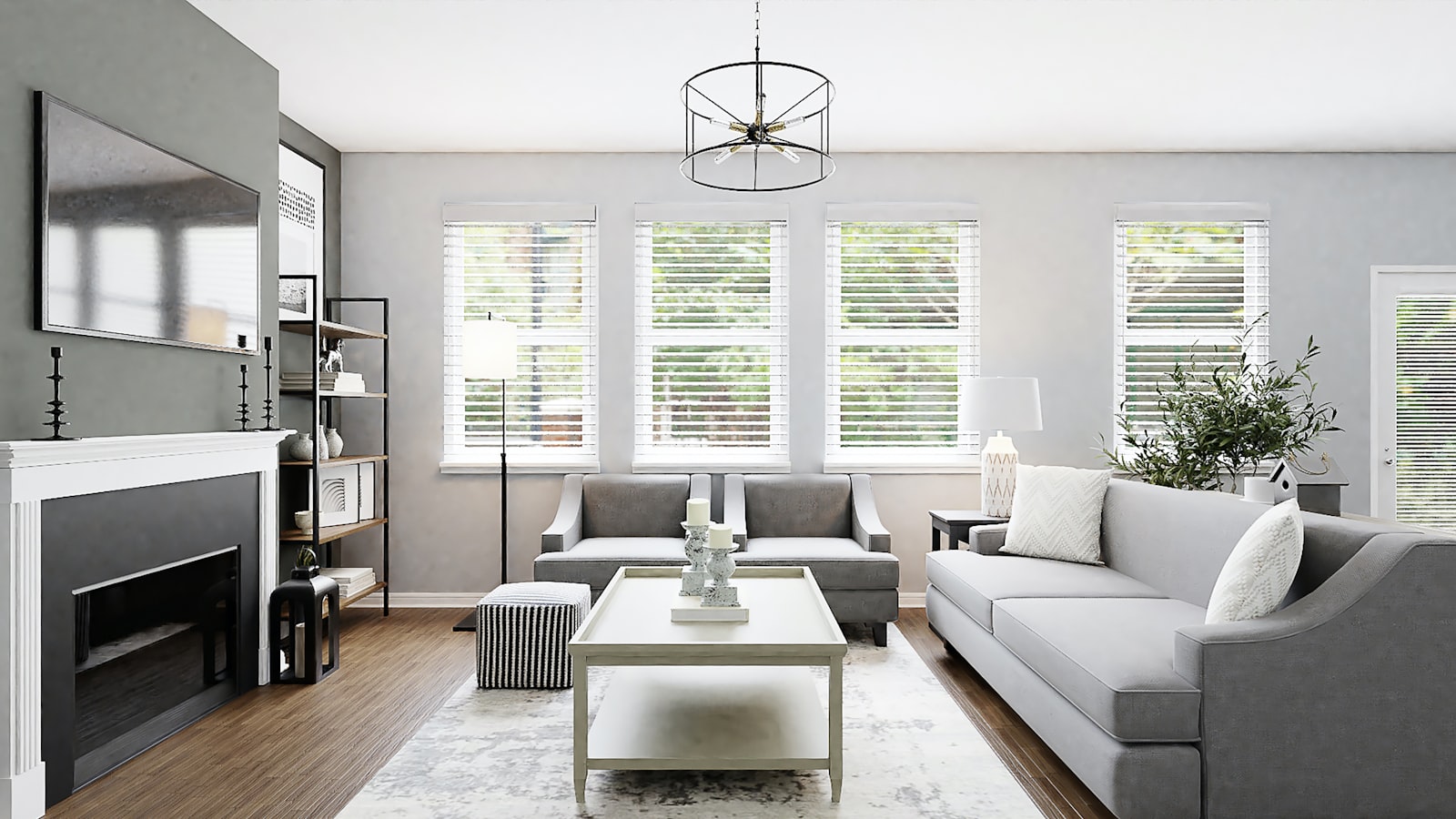
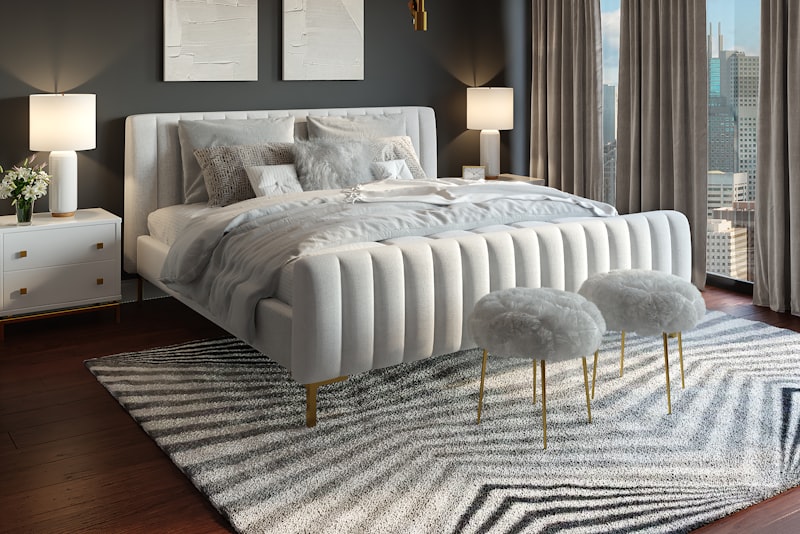
A rug is the simplest divider there is. A rug under the seating area and a different one by the bed instantly tell the eye these are two distinct places. Furniture works as a soft wall too: the back of a sofa can face away from the bed to separate sleeping from sitting, and an open shelving unit can split the room while still letting light pass through. A folding screen or a curtain on a track can hide the bed entirely when you want guests over.
Boundaries in a studio are felt, not built — a rug, a sofa back, or a pool of lamplight can divide a room as clearly as a wall.
Lighting is the most underrated zoning tool of all. Give each area its own light source — a reading lamp by the bed, a warmer glow over the sofa, a brighter task light at the desk — and you can illuminate one zone while the others recede into the background. That alone makes a studio feel like it has separate rooms after dark. If you're tempted to add wired fixtures or move outlets, keep yourself to plug-in lamps and leave any hardwiring to a licensed electrician.
Furnish for flexibility#
In a studio, furniture has to flex, because the same square footage has to host your whole life. The pieces that earn their place are the ones that do two jobs, move easily, or disappear when they're not needed. Fill the room with single-purpose furniture and it'll feel jammed; choose adaptable pieces and the room can quietly become whatever you need that hour.
Reach for hardworking, movable items. A sofa bed or daybed blurs the line between living and sleeping. A drop-leaf or extendable table seats friends for dinner and shrinks to a console the rest of the time. An ottoman stores blankets and serves as a seat or a footrest. Nesting tables pull apart when guests arrive and tuck away after. Furniture on casters lets you reconfigure the whole room in minutes, opening the floor for company or closing it down for a cozy night in.
Scale matters as much as function. Oversized furniture swallows a studio, so look for pieces that fit the room's proportions — a compact sofa with slim legs, a bed frame that sits low and light. Furniture raised on legs lets light and floor flow underneath, which keeps even a fully furnished studio feeling open rather than packed.
Tie it all together so it reads as home#
With so much happening in one room, the risk is visual chaos — a patchwork of zones that never settles into a whole. The fix is cohesion. When the entire studio shares one calm palette and a consistent style, the eye stops cataloging separate areas and starts reading a single, intentional home. That unity is what separates a thoughtful studio from a glorified storage unit.
Pick a palette you love and carry it everywhere, so the bed linens, the sofa, the rugs, and the walls all feel like they belong to the same family. A few principles keep the look pulled together:
- Repeat a couple of accent colors across every zone so they speak to each other
- Keep larger pieces in quiet, related tones and save bold patterns for small accents
- Let texture and warm lighting add the coziness, not loud contrast
- Leave some surfaces and wall space empty so the room can breathe
Then add the personal layer that makes it yours — a few plants, books you actually read, art you love, a soft throw. These are what turn an efficient layout into a home you want to come back to. Design your studio this way, zoning with intention, dividing without walls, furnishing for flexibility, and tying it all together, and that single room will stop feeling like a compromise. It'll feel like a small home that lives much bigger than its footprint, shaped entirely around the life you actually live.