A small kitchen is not a compromise — it can be the most efficient room in the house. Everything is within arm's reach, and once it is organized well, cooking in it feels easy rather than tight. The secret is to design for how you actually move and cook, then keep the surfaces calm and the storage clever.
Plan the way you move before anything else#
Before you think about finishes, think about flow. In any kitchen, the three points you travel between most are the sink, the stove, and the fridge. When those sit in a comfortable relationship to one another, cooking feels smooth even in a tiny footprint. When they fight the layout, no amount of pretty tile will fix the frustration.
In a small kitchen you usually cannot move much, so work with what you have. Notice where you naturally prep, where you set hot pans down, where you stand to wash up. Then arrange your tools and ingredients to support that path: knives and boards near the prep zone, oils and pans by the stove, everyday plates near the dishwasher or sink. The goal is to stop crossing the room for things mid-task.
If you are renovating and tempted to relocate the sink, the gas line, or anything electrical, that is the moment to bring in a licensed professional. Moving services is rarely a DIY job, and getting it wrong is expensive in every sense. A good designer or tradesperson can often find a better layout within the space you already have.
Clear the counters and the room grows#
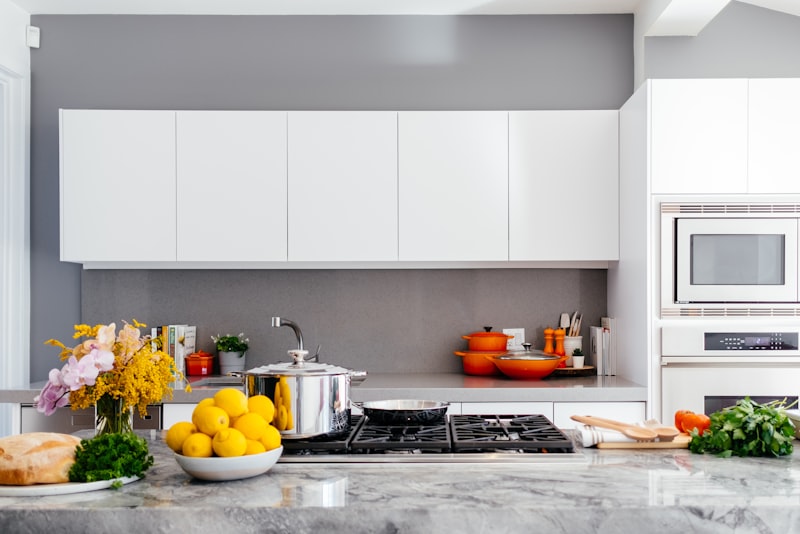
Counter space is the most valuable real estate in a small kitchen, and it disappears fast. Every appliance, jar, and stray utensil left out shrinks the room you have to actually work. The single most effective thing you can do is decide that the worktop is for working, not for storing.
In a small kitchen, an empty stretch of counter is a luxury you create by putting things away, not a feature you wish you had been given.
Be ruthless about what earns a permanent spot on the surface. The appliance you use daily can stay; the one you reach for twice a year should live in a cupboard. Group what remains so it looks intentional rather than scattered — a small tray for oils, a single crock for the utensils you reach for constantly. The visual calm of a clear run of counter makes the whole kitchen feel bigger and far more pleasant to cook in.
The same logic applies to the things on the walls and open shelves. A few well-loved pieces with space around them look styled; a shelf crammed edge to edge just looks full. Edit your kitchen the way you would edit a sentence — keep what works and cut the rest.
It helps to do this seasonally rather than once and forever. Kitchens quietly fill back up: a gadget arrives, a jar gets emptied but not thrown out, a stack of takeout menus settles by the kettle. Every few months, take everything off the counter, wipe it down, and only put back what genuinely earns its spot. You will be surprised how much you can return to a drawer or cupboard, and how much lighter the whole room feels for it. A small kitchen does not stay clear on its own — it stays clear because you keep choosing what gets to live in plain sight.
Take your storage up the walls#
When the floor and counters are limited, the walls are where you find more room. Most small kitchens have unused vertical space above the worktop and below the ceiling that can carry real load if you let it.
A handful of moves make a big difference:
- Run cabinets or shelving as high as you can reach, storing seldom-used items up top
- Hang a rail for utensils, mugs, or pans to free up drawers and counter space
- Use the inside of cupboard doors for racks, hooks, and small storage
- Add a narrow shelf or magnetic strip for spices and knives rather than a counter block
The aim is to give everything a home off the worktop. When items live on the wall or behind a door, the surfaces stay clear and the kitchen feels twice its size. Open shelving can look lovely and keep things in reach, but it only works if you commit to keeping it tidy — if a closed cupboard helps you relax, choose the cupboard.
Keep finishes light, continuous, and yours#
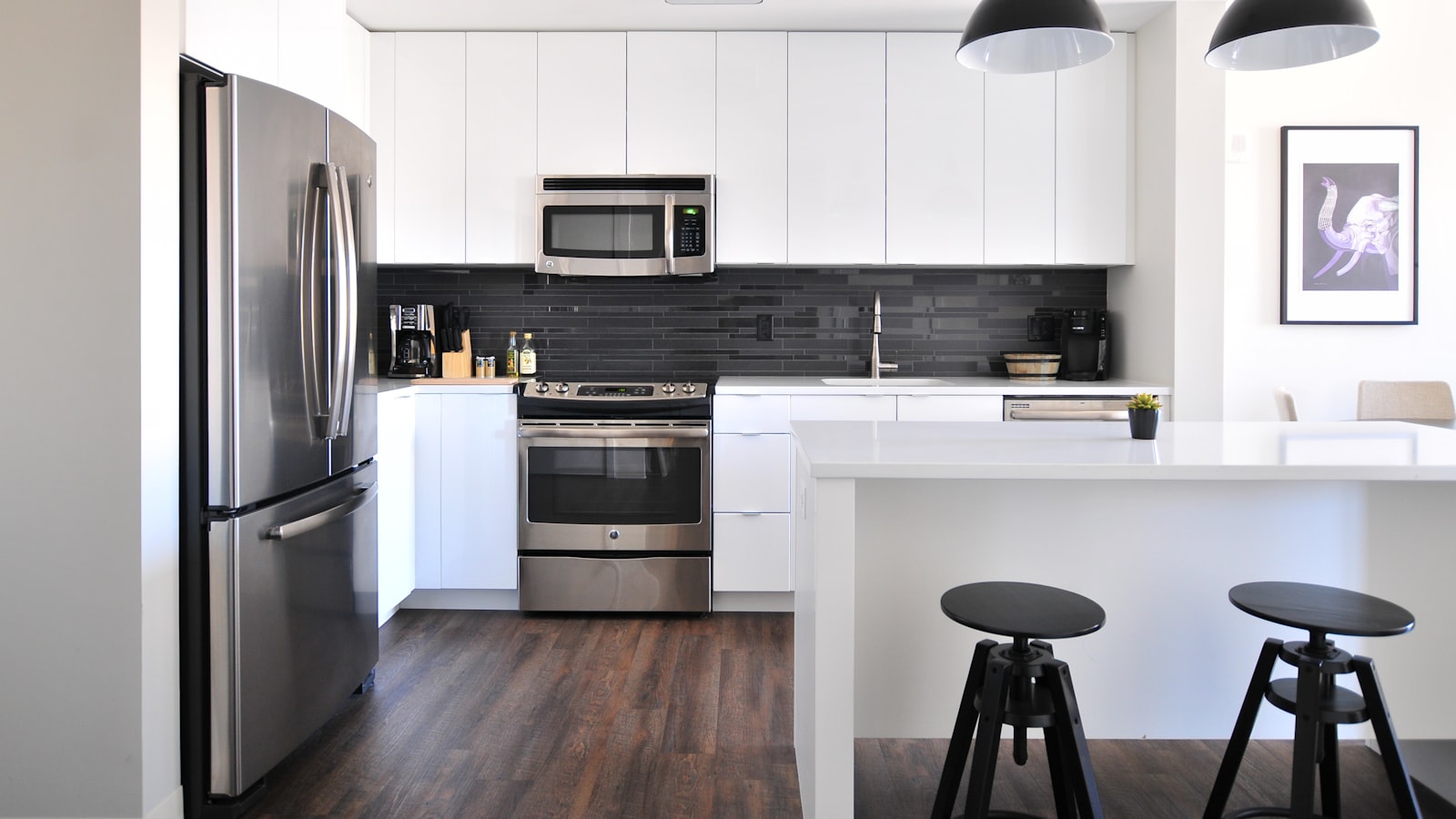
Color does quiet, powerful work in a small kitchen. Pale, closely related tones make walls and cabinets recede, blurring the edges of the room so it feels open. When the cabinets, walls, and counter live in a similar tonal family, your eye flows across the space instead of stopping at every break, and the kitchen reads as one calm whole rather than a patchwork.
That does not mean it has to be all white or feel clinical. You can absolutely use warmth and a deeper accent — the principle is consistency and light, not the absence of color. Reflective and glossy surfaces help too, bouncing daylight around a space that may not have much of its own. A mirror, a backsplash with a slight sheen, or a glossy cabinet front all pass light along rather than swallowing it.
Then make it feel like yours. A small kitchen still has room for personality — a strip of art on a free wall, a plant on the sill, a beautiful board left leaning, the handles you chose because you liked them. These small, deliberate touches give the room soul without filling it up.
A small kitchen rewards good thinking more than square footage. Set up the flow so cooking feels natural, keep the counters clear so the space breathes, send your storage up the walls, and let light, continuous finishes do the rest. Design it that way and you end up with a kitchen that punches well above its size — efficient, open, and genuinely a pleasure to cook in every single day.