Walk into a room that feels off and there's a good chance it's missing a focal point. Your eye wanders, looking for somewhere to land, and never quite settles. The fix is simpler than it sounds: pick one thing for the room to be about, then arrange everything else to support it.
What a focal point actually does#
A focal point is the first thing your eye lands on when you walk into a room, and the spot it keeps returning to. Think of it as the room's hero — the feature that announces what the space is about and gives everything else a reason to be where it is. Without one, a room reads as a collection of objects competing for attention. With one, the same furniture suddenly looks intentional, because now there's a center of gravity holding it all together.
You don't need a grand architectural feature for this to work. A focal point can be dramatic, like a fireplace or a wall of windows, or it can be quiet, like a single beautiful painting or a bed dressed with care. What matters is that one element clearly leads and the others follow. The moment you decide what the room is about, a surprising number of decorating questions answer themselves — where the sofa goes, where the light should fall, what belongs on the walls.
The goal isn't to make a room loud. It's to give the eye a place to rest and a path to travel. A well-chosen focal point does both at once, and it does it the second someone steps through the door.
Find the one you already have#
Before you buy a thing, take a slow look at the room and ask what wants to be the star. Most spaces hand you a candidate for free. An existing fireplace is almost always the natural anchor; a generous window with a good view practically begs to lead. A bedroom usually has an obvious one in the bed, simply because of its size and where it sits. Built-in shelving, an architectural nook, even a beautiful original floor can all carry the role.
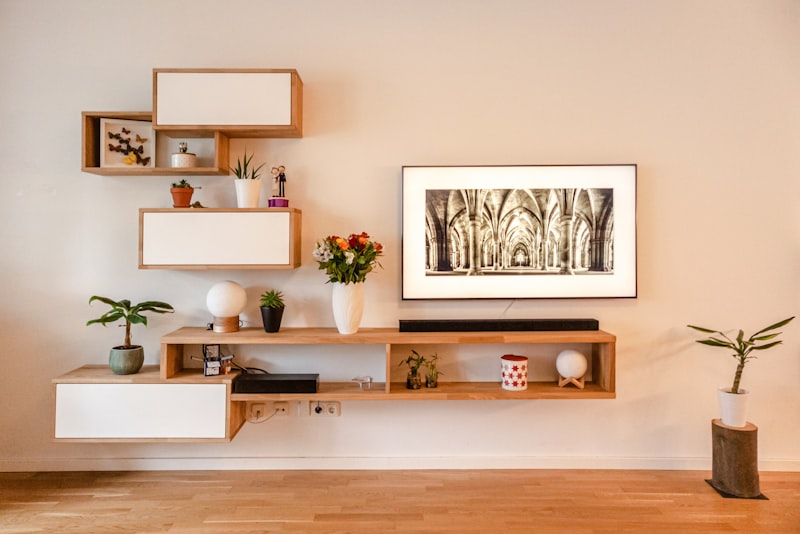
If nothing structural stands out, you create the focal point yourself, and this is where it gets fun. A large piece of art on an otherwise plain wall will do it. So will a bold sofa in a color you love, a striking light fixture, a tall plant, a painted accent wall, or a handsome piece of furniture like an armoire or a dramatic headboard. The principle is the same whether the anchor came with the house or arrived in a delivery box: one element should be visually stronger than everything around it.
Pick the focal point first, then decorate toward it. A room built around a clear anchor almost arranges itself; a room without one resists every choice you make.
When you're choosing, picture the doorway. Stand where a guest would stand and notice what your eye finds first. If it lands on something worth looking at, lean into it. If it lands on the back of a chair or a tangle of cords, you've just learned what the room is missing — and what to fix.
Build the room around it#
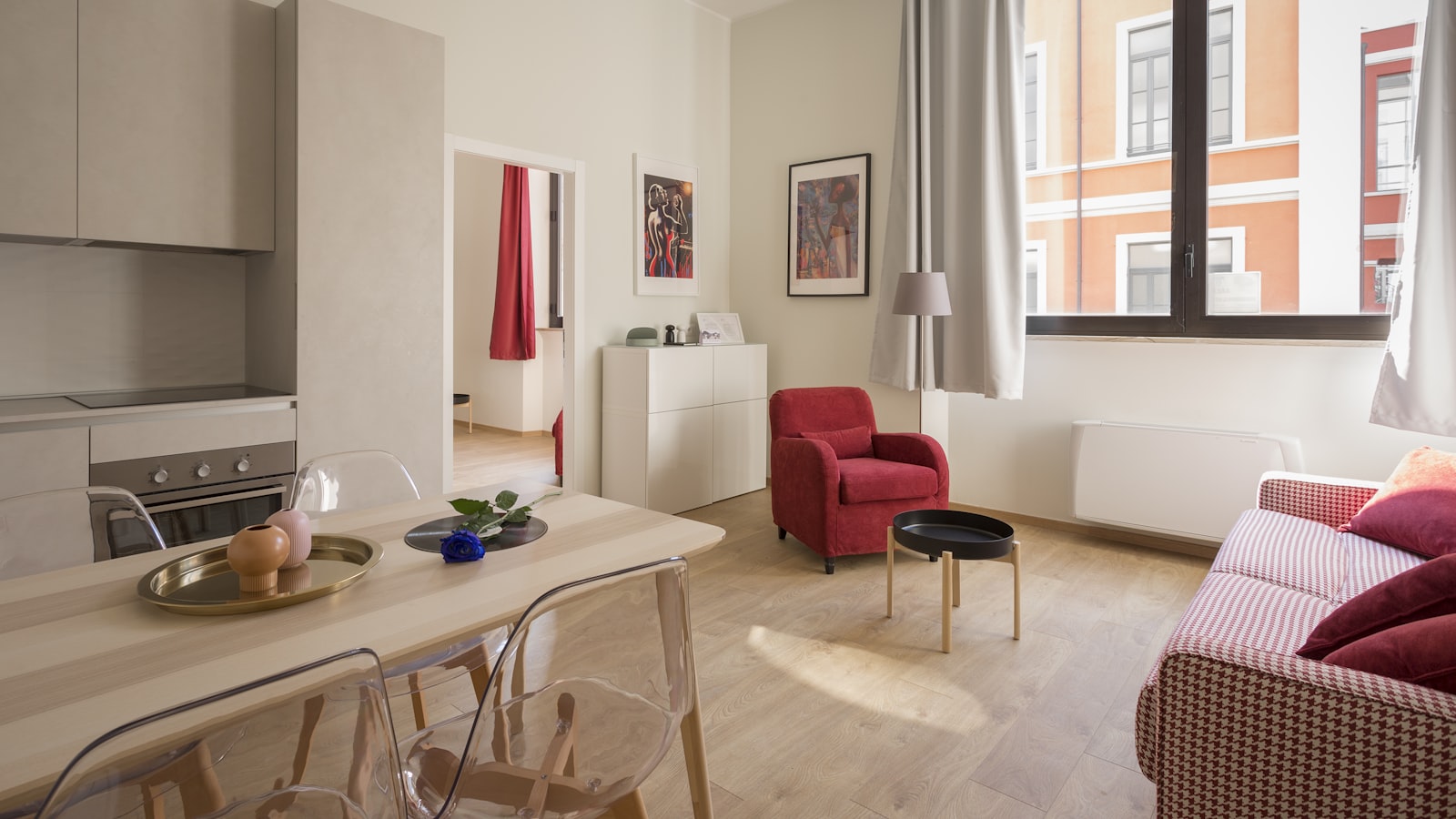
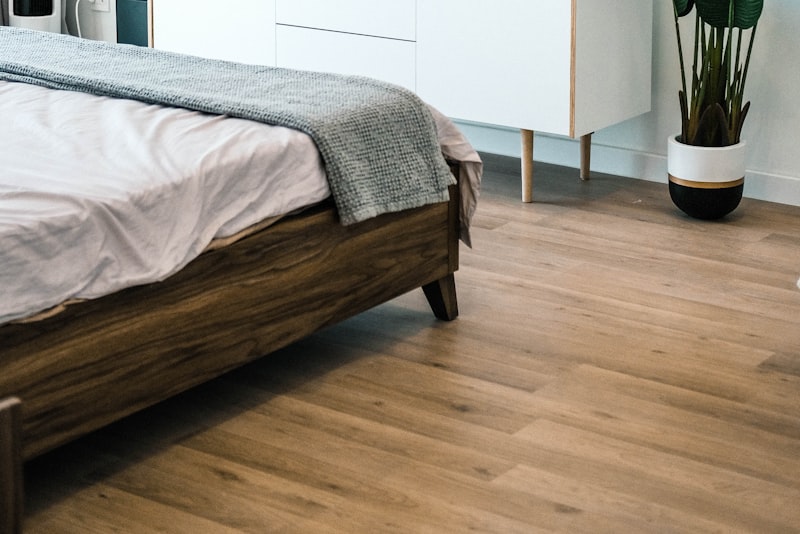
Once you've chosen your anchor, the rest of the room should quietly point toward it. Arrangement is how you make a focal point read as deliberate rather than accidental. In a living room, angle the seating so it faces or gently frames the feature — chairs and a sofa turned toward a fireplace or a view create an immediate sense of order, and they make the room more inviting to sit in, too. In a bedroom, let the bed command its wall and keep the nightstands and lamps in supporting roles on either side.
Lighting is your quiet ally here. A focal point that sits in shadow can't do its job, so give it light. A picture light over art, a lamp near a beautiful chair, or a fixture that draws the eye upward all reinforce where you want attention to go. Layered light that pools around your anchor will pull the eye toward it even when you're not thinking about it.
Color and contrast finish the work. Your focal point should stand out a little from its surroundings — a darker frame against a pale wall, a saturated cushion against a neutral sofa, a glossy object among matte ones. You're not trying to make the rest of the room disappear; you're letting one thing be a touch louder than its neighbors so the eye knows where to begin. A few simple cues will do it:
- Point your largest furniture toward the anchor, not away from it.
- Light the focal point so it never falls into shadow.
- Give it a little contrast in color, scale, or finish so it reads first.
Let it breathe and avoid the crowd#
The most common mistake isn't choosing the wrong focal point — it's choosing several. When a room has a fireplace and a gallery wall and a bold rug and a statement chandelier, all shouting at once, the eye gives up. A strong room usually has one clear hero and a supporting cast that knows its place. If two features genuinely compete, decide which one leads, then dial the other back so it complements rather than fights.
This is where restraint pays off. Give your focal point a little room to breathe instead of crowding it with competing accents. A piece of art surrounded by clutter loses its power; a fireplace flanked by overstuffed shelves stops feeling like the heart of the room. Quieting the area around your anchor is just as important as choosing the anchor itself — the calm is what lets it shine.
Restraint doesn't mean a bare, lifeless room. It means a clear hierarchy: one thing first, the rest in support. You can have plenty of personality, color, and pattern in a space and still keep a single strong focal point, as long as everything else agrees to play second. That agreement is what makes a room feel composed instead of chaotic, and it costs nothing but a little discipline.
Make the room about something#
Creating a focal point is one of the highest-impact, lowest-cost moves in decorating. You don't need new furniture or a renovation — often you just need to decide what your room is about, then turn everything to face it. Choose your anchor, light it well, arrange the room toward it, and keep the competition quiet. That's the whole recipe, and it works in a studio apartment as surely as it works in a grand living room.
Try it this week in the room that's been bothering you. Stand in the doorway, find what your eye wants to land on, and commit to it. Then nudge the furniture, add a lamp, clear away the clutter that's stealing its thunder. You'll feel the shift almost immediately — the restless room settles, the space starts to make sense, and you'll wonder why it ever felt unfinished. That's the quiet magic of giving a room one beautiful thing to be about.