A furniture floor plan is just a simple map of your room drawn before you start hauling furniture around. It sounds fussy until you've shoved a sofa across a room four times and still hated where it landed. A little planning on paper saves your back, your patience, and a surprising number of bad decisions.
Measure everything first#
Every good floor plan starts with honest numbers, so grab a tape measure and write things down rather than trusting your eye. Measure the length and width of the room, then note the height of the ceiling while you're at it. Rooms are rarely the perfect rectangles we imagine, so capture every alcove, chimney breast, and angled wall, because those quirks are exactly what trip up a layout later.
Then measure the things you can't move. Windows, doors, radiators, vents, and the way each door swings all shape where furniture can actually go. Mark how far a door opens into the room, where light pours in, and where the heat sources sit, since you don't want a sofa baking against a radiator or a bookshelf blocking a window. Note the location of power outlets and any wall switches too, because nothing derails a beautiful plan faster than a lamp with nowhere to plug in.
With the room recorded, measure your furniture, both what you own and anything you're hoping to buy. Length, depth, and height for each piece. If you're shopping, write those numbers on a card and carry it with you, because a sofa that feels modest in a vast showroom can swallow a real living room whole. Accurate measurements are the whole foundation here, so take the extra ten minutes and get them right.
Draw the room to scale#
Now turn those numbers into a picture. You don't need fancy software, though plenty of free room-planning apps exist if you like them. A sheet of graph paper works beautifully: let one square equal a set distance, sketch the walls to match your measurements, and mark in the doors, windows, and fixed features you recorded. Suddenly the room exists at a size you can see all at once.
Next, make little scale cutouts for each piece of furniture, drawn to the same ratio as the room. These paper shapes are the trick that makes the whole exercise worthwhile, because you can slide them around the plan in seconds and try ten arrangements without straining a muscle. Push the sofa to the far wall, float it in the middle, angle it toward the window — the cutouts let you experiment freely and see what genuinely fits.
Cardboard cutouts laid on the actual floor are even better than paper on a plan. Walk around them for a day and your room will tell you what works far more honestly than any sketch.
As you move pieces around, keep checking them against your real measurements rather than how they look on the page. A plan only helps if it's faithful to the room, so resist the urge to nudge a wall outward to make something fit. If a piece is too big on paper, it'll be too big in life, and the floor plan has just saved you from learning that the hard way.
Plan the paths before the furniture#
Here's the move that separates a room that flows from one that fights you: plan the walkways first, then arrange the furniture around them. It feels backward, but a layout lives or dies on how easily people move through it. Trace the natural routes someone takes — from the door to the seating, from the seating to the window, across to the hallway — and protect those paths before a single chair goes down.
Give your main routes enough room to pass through comfortably, roughly the width of a relaxed walking lane, so no one has to turn sideways or squeeze past a coffee table. Between seating and a table, leave just enough space to set down a cup and stretch your legs without barking a shin. These clearances aren't rigid rules so much as the difference between a room that feels generous and one that feels like an obstacle course.
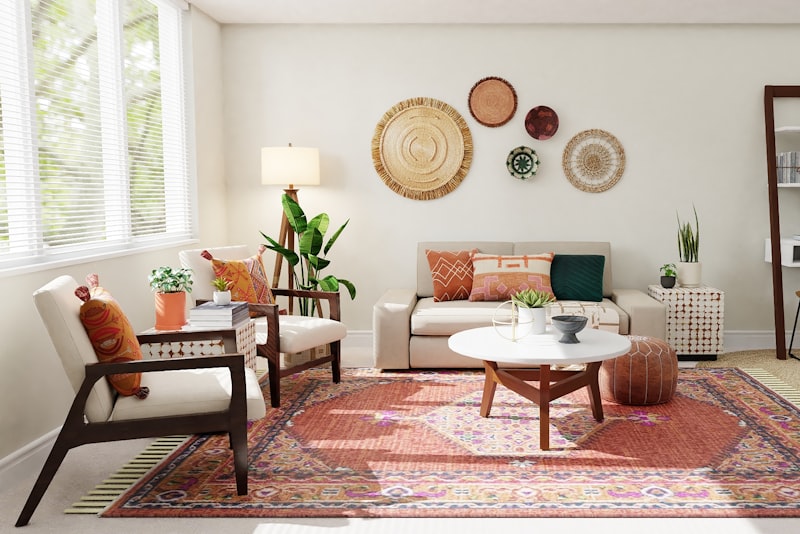
Once the paths are protected, place the big pieces with intention. Start with the largest item, usually the sofa or the bed, and let it anchor the room against its best wall or focal point. Everything else arranges in conversation with it. Pull seating close enough that people can talk without raising their voices, point chairs gently toward each other or a shared focal point like a window or fireplace, and resist the instinct to line every piece flat against the walls. A little furniture floating inward almost always feels warmer and more intentional than a ring of seating staring across an empty middle.
Test it before you lift a thing#
The whole reward of a floor plan is that you get to fail cheaply. Before you move anything heavy, live with the plan for a moment. Stand where the sofa will go and check the view. Imagine carrying a tray to the coffee table or pulling out a dining chair. Picture the morning light landing where you'll actually sit. These little mental walk-throughs catch the awkward bits a drawing alone can hide.
If you can, take the test one step further and mock it up at full size. Painter's tape on the floor to outline each piece, or flattened moving boxes standing in for the furniture, turn an abstract plan into something you can walk around and feel. A few things are worth confirming with the layout taped out:
- Every door and drawer still opens fully without hitting a piece of furniture.
- The walkways feel easy when you actually move along them, not just on paper.
- The room has a clear focal point and the seating relates to it.
Only when the plan survives that test should you start the heavy lifting. And give yourself permission to adjust once the furniture is in, because a real room always reveals a thing or two the plan couldn't. A floor plan isn't a cage; it's a head start, and it lets you spend your energy on small, satisfying tweaks instead of exhausting full-room reshuffles.
A furniture floor plan turns a daunting, sweaty afternoon into a calm afternoon of arranging paper. Measure honestly, draw to scale, protect your walkways, and test before you lift, and you'll land on a layout that feels right the first time you live in it. That's the quiet magic of planning ahead: the room simply works, and you get to enjoy it instead of rearranging it.