A living room is where life actually happens — slow mornings, loud movie nights, the friend who stays too late and you're glad they did. Arranging the furniture isn't about following a diagram; it's about shaping how the room feels and how easily people move through it. The good news is that a handful of friendly principles will carry you further than any rule book.
Start with the focal point#
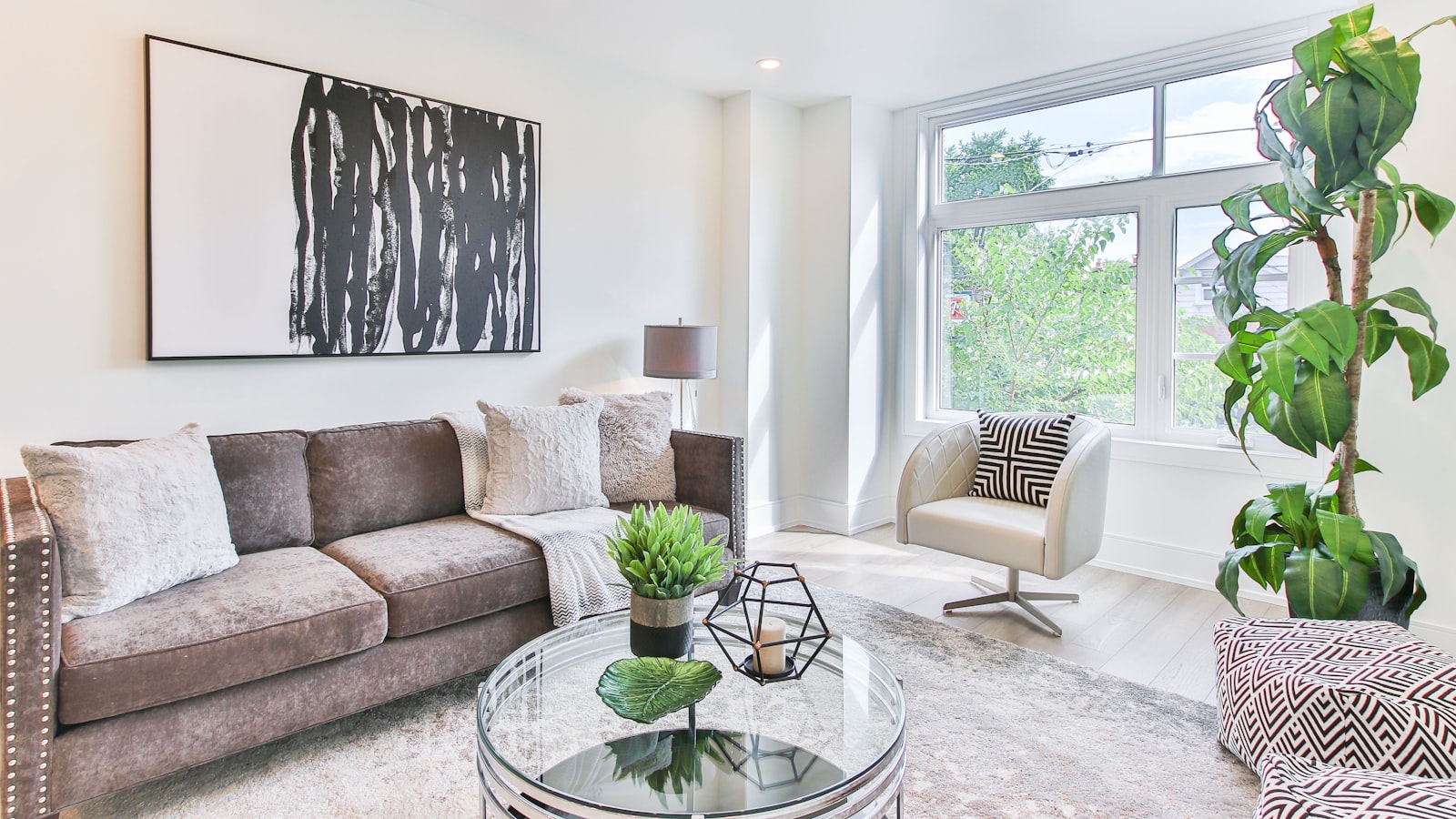
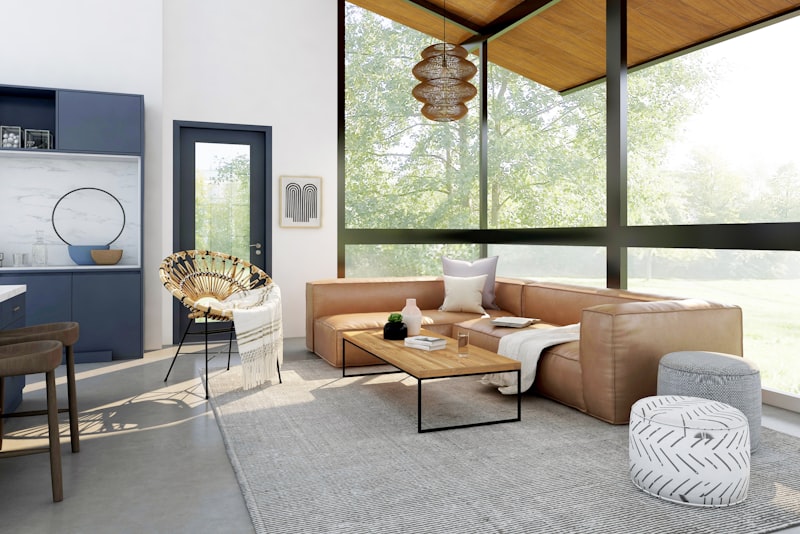
Every comfortable room has a center of gravity — the thing your eye lands on when you walk in. It might be a fireplace, a big window with a view, a television, or a piece of art you love. Pick one and let it anchor the whole arrangement. When seating points toward a clear focal point, the room instantly reads as intentional rather than scattered.
If you have two contenders — say, a fireplace and a TV on a different wall — you don't have to choose forever. Angle a swivel chair, or set the sofa so it splits the difference and faces the larger of the two. Rooms with competing focal points feel restless, so give one of them the leading role and let the other play support.
Once your anchor is set, everything else has a job: to make that focal point easy and pleasant to enjoy.
Make conversation and flow effortless#
The most common living room mistake is shoving every piece flat against the walls. It seems to create space, but it usually does the opposite — leaving a lonely island of carpet in the middle while people sit too far apart to talk without raising their voices. Pull your seating inward. Floating furniture a little off the wall makes a room feel more generous, not less.
Aim to keep seats close enough for easy conversation but not so close that knees collide. A coffee table within comfortable reach of the main sofa keeps drinks and books where people actually want them. Leave clear walking paths around the grouping — enough room to pass through without anyone tucking in their feet.
A room that's beautiful but blocks the way to the kitchen will lose to a plainer room you can move through. Comfort and flow win every single time.
Think about how people enter and exit. You shouldn't have to squeeze between the sofa and the wall or step over an ottoman to reach the hallway. If a piece is constantly in the way, it's in the wrong place — trust the friction your body notices and move it.
Ground the room with a rug and balance#
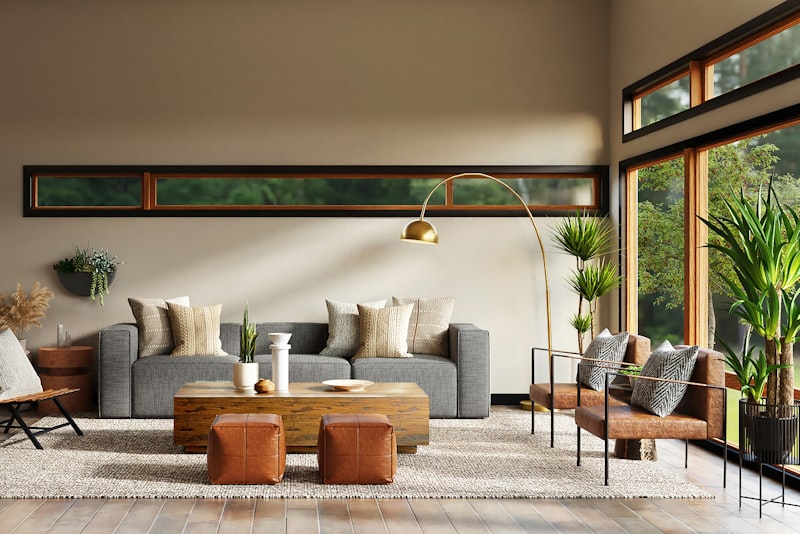
A rug does quiet, powerful work: it pulls a seating group together into one cohesive zone. The trick is size. A rug that's too small makes everything float and look undersized, like a postage stamp under a big arrangement. As a guide, the rug should be large enough that at least the front legs of your sofa and chairs sit on it. Bigger rooms can handle a rug that holds every leg, which feels luxurious and complete.
Balance matters too, and it doesn't mean symmetry. You're distributing visual weight around the room so no corner feels heavy while another floats empty. A tall bookshelf on one side can be balanced by a leafy plant or a floor lamp on the other. A chunky sofa reads lighter when it's paired with an airy, open-armed chair across from it. Walk into the room and ask yourself where your eye feels pulled — if it always drifts to one corner, redistribute.
Here are a few moves that reliably help a room feel settled:
- Vary the heights — mix a low coffee table, mid-height seating, and something tall like a lamp or plant.
- Leave breathing room around large pieces so they don't crowd the walls or each other.
- Repeat a shape or tone across the room so the eye travels in a gentle loop rather than snagging.
None of this requires matching sets or a single style. A vintage armchair can sit happily beside a modern sofa as long as the proportions and the balance feel right to you.
Plan it on the floor before you lift a thing#
Furniture is heavy, and your back will thank you for thinking before lifting. Before you commit, sketch the room on paper or map it out with painter's tape directly on the floor. Mark where the sofa, chairs, and table will go, then live with the outline for a day. Walk the paths. Sit where you'd sit. You'll feel a cramped corner long before you'd ever see it on a drawing.
Measure your doorways and the room itself, then measure the pieces you already own or plan to buy. A sofa that looks perfect in a showroom can swallow a small room or block a window once it's home. Pay attention to what windows and outlets you might cover — a beautifully placed console that hides a radiator or buries the only outlet creates daily annoyance.
If your plan calls for moving anything tied to the bones of the house — relocating a wall-mounted fixture, adding a recessed outlet, or changing built-in lighting — bring in a licensed professional. Arranging what you own is creative play; touching electrical or structural elements is not a place to improvise.
Let the room earn its keep#
The best arrangement is the one that disappears — you stop noticing the furniture and simply enjoy the room. Give it a few weeks of real use before you decide it's finished. You'll learn where you actually drop your keys, which chair everyone fights over, and whether that reading nook gets used or just collects dust. Then nudge things accordingly.
Your living room doesn't have to look like anyone else's to be right. Start with a focal point, pull the seating in close, ground it with a proper rug, and test before you haul. Do that, and you'll end up with a space that works as hard as it looks good — a room you're genuinely happy to come home to.